Choosing the Best Lightweight Cupboards for Home Storage
By Sarah Jenkins (BIID Associate Member | BA (Hons) Interior Architecture, Chelsea College of Arts) | 2026-11-14 | 15 min read
Editorial & Affiliate Disclosure: LUMAA HOME is reader-supported. Our editors independently research, test, and specify every material and product featured. When you purchase through retailer links on our site, we may earn an affiliate commission at no extra cost to you, in accordance with UK ASA guidelines.
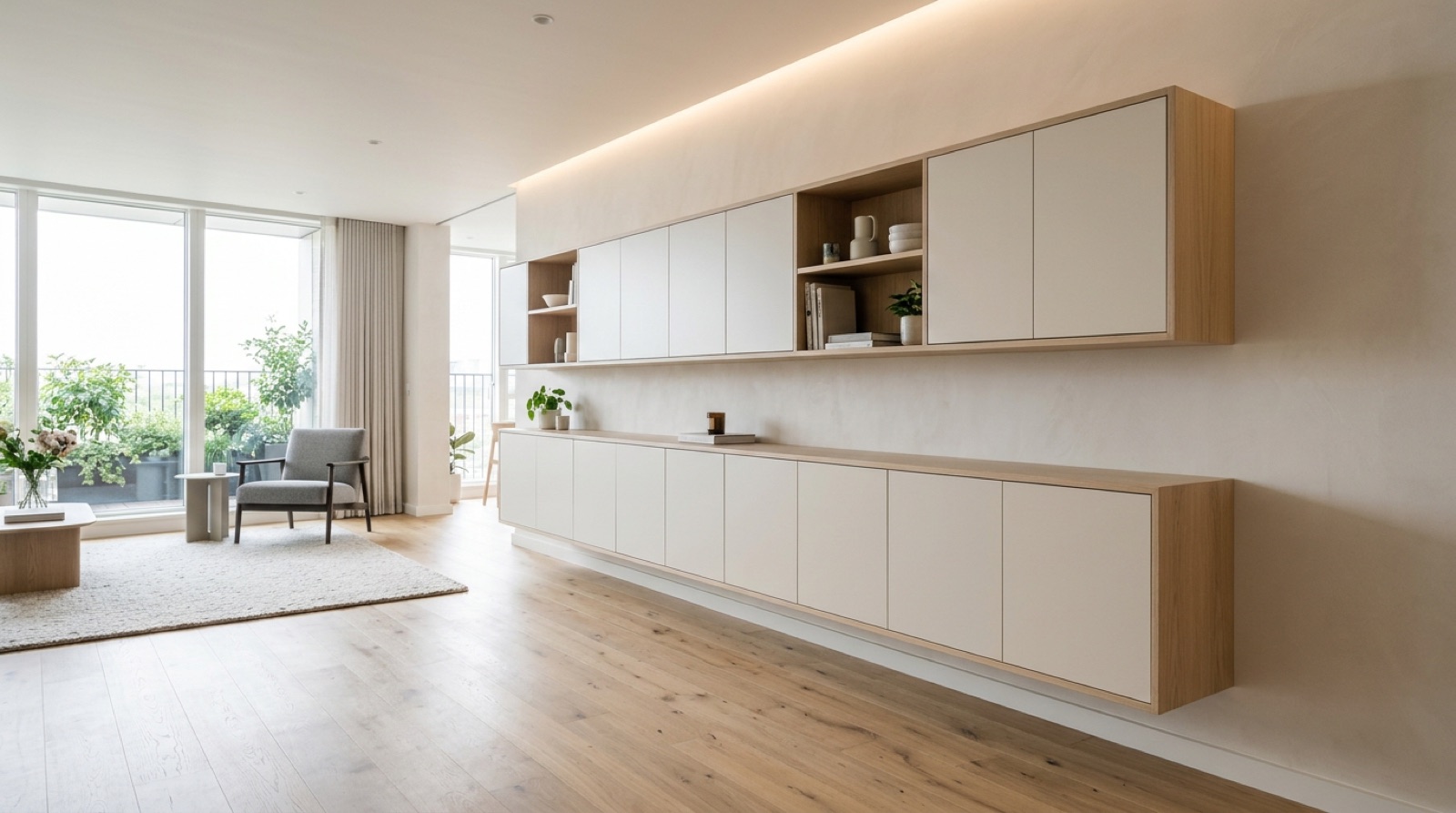
Why Heavy Storage Is Such a Headache in Modern Flats and Houses
Dragging a fifty-kilogram wardrobe made from solid oak or thick chipboard up two flights of stairs is exhausting work. If you are comparing solid timber pieces for your rooms, our guide on how to pick the right oak cabinet breaks down where hardwood works best. Traditional storage furniture is heavy, awkward to carry, plus difficult to squeeze around tight stair landings. If you live alone or move flats every year or two, heavy cabinets quickly become a major burden.
Modern building practices make heavy furniture even harder to manage. Most interior partition walls today are built as a drylined hollow wall where thin plaster sheets cover an empty wall cavity. Hanging a thirty-kilogram wooden cabinet on that kind of wall puts intense outward strain on wall fixings. If screws work loose under heavy weight, the cupboard can pull straight off the wall, leaving a messy hole in the plaster.
Carrying Heavy Flat-Packs Upstairs by Yourself
Anyone who has moved into a flat knows the dread of carrying a huge flat-pack box up a tight staircase. The box is long, heavy, plus impossible to pivot around handrails without scuffing wall paint. Heavy cabinets demand two strong people just to lift the empty frame into place.
Choosing a lightweight storage cupboard changes the entire moving process. When a two-door cabinet weighs fourteen kilograms instead of forty-five, one person can pick it up, carry it through narrow doorways, plus put it together without back strain. If you decide to redecorate or move rooms later on, you simply clear the shelves and shift the cupboard across the room yourself. For background on standard cabinet sizing and construction, take a look at our kitchen unit carcasses sizes and trade guide.
Why Heavy Cabinets Pull Down Drywall and Plasterboard
Plasterboard is essentially crushed chalk wrapped inside paper sheets. It holds up well against flat pressing forces, but it has very little resistance when a heavy screw pulls straight out from the front. When you hang a heavy storage unit, the top screws act like a lever, pulling outward while the bottom edge presses into the plaster.
If you hang a heavy solid cabinet on a plasterboard stud wall, you are placing immense strain on a chalky surface. The moment you fill the cupboard with dinner plates, heavy books, or tinned food, that pulling force doubles. Switching to modern lightweight cupboards cuts down initial carcass weight by more than half, giving your wall anchors an easy job and keeping your walls safe from damage.
The Best Types of Lightweight Cupboards and How They Are Built
Lightweight storage comes in several distinct builds, each suited to different rooms, budgets, plus storage tasks. Understanding what materials go into each build helps you pick the right unit without wasting money on something that will not hold up to your daily routine.
Canvas and Fabric Storage for Quick Spare Room Organization
Fabric wardrobes are the lightest option you can buy. They use an outer frame of thin metal tubes or plastic poles that push together into corner connectors, covered by a zip-up fabric jacket that rolls open when you need access.
These pieces work well as temporary utility cupboards in spare rooms, attics, student accommodation, or rental flats. A complete two-door fabric wardrobe weighs only four to six kilograms, meaning you can assemble it in twenty minutes without tools. Fabric shelves hold folded jumpers, bed sheets, plus towels neatly. However, fabric shelves sag if you place heavy tools, cast-iron pots, or stacks of hardback books on them. Treat them as light clothing storage, then they will give you great service.
Modular Plastic Cubes for Shoes and Kids Toys
Modular storage units made from interlocking polypropylene sheets offer flexible, waterproof storage. Steel wire borders keep the flat plastic panels stiff, while round corner connectors snap the panels together without screws.
What makes these units so practical is their adaptability. You can assemble them as a tall standing cupboard, a low sideboard, or a stepped arrangement that fits under sloping attic ceilings or beneath stairs. The plastic material is completely waterproof, so muddy shoes, damp bathroom towels, plus sticky toys will not harm it. A quick wipe with soapy water keeps them clean.
Lightweight Poplar Plywood and Hollow Honeycomb Cabinets
If you want storage that looks like handsome permanent furniture without the brutal weight of traditional boards, look for lightweight furniture board options. Many quality cabinets use poplar core plywood, especially 15mm lightweight ply. Plantation poplar produces clean, straight-grained wood with low resin content. In a cross-ply sheet, it gives you dependable screw-holding strength while cutting carcass weight by forty percent compared to standard birch ply or dense MDF.
Another clever build style uses honeycomb core panels featuring board-on-frame construction. In these panels, an expanded hexagonal paper honeycomb core sits inside a perimeter wood frame, capped on top and bottom with thin wood skins. This delivers an ultra-low density rating kg/m³ between one hundred and eighty and two hundred and fifty. These panels provide an exceptional stiffness-to-weight ratio, allowing furniture makers to build wide cabinet doors and thick floating shelves that remain feather-light. Adding a durable high-pressure laminate finish gives the board tough, scratch-resistant protection that looks identical to solid timber.
Sheet Metal Lockers for Garages and Utility Rooms
Powder-coated steel lockers and slim aluminium cabinets bring clean utility storage into home workshops, basements, plus laundry spaces. Made from thin zero-point-seven millimetre pressed steel sheets, these cupboards provide strong fire safety and security with very little mass.
Ordinary melamine-faced chipboard often swells, bubbles, plus peels when placed in damp cellars or steamy laundry rooms. In contrast, thin metal cabinets never absorb water, wipe clean in seconds, plus keep paint tins, garden gear, plus household chemicals safely organized. Because the metal walls are so slim, the empty locker remains light enough for one person to carry into an outbuilding or basement without help.
Comparing Weight Capacity and Room Uses Across Cupboard Types
Use this quick reference table to see how different cupboard builds compare for everyday household tasks.
| Cupboard Build Style | Typical Empty Weight | Best Room in the Home | What to Store Inside | Assembly Effort |
|---|---|---|---|---|
| Fabric Frame Cupboards | 3 - 6 kg | Spare bedrooms, attic eaves | Folded clothes, bed sheets, towels | Tool-free push-fit in 20 minutes |
| Plastic Modular Cubes | 5 - 9 kg | Hallways, kids' rooms, bathrooms | Shoes, kids' toys, laundry bottles | Click-in connectors, build any shape |
| Lightweight Poplar Plywood | 12 - 16 kg | Living rooms, main bedrooms, alcoves | Dinnerware, books, pantry supplies | Screw-together flat-pack assembly |
| Hollow-Core Honeycomb | 10 - 15 kg | Bedrooms, home offices, hallways | Linen, office folders, decorative items | Standard cam-lock flat-pack build |
| Powder-Coated Steel Locker | 14 - 18 kg | Utility rooms, garages, boot rooms | Tools, cleaning chemicals, garden gear | Fold-out metal panels with clip joints |
How Much Weight Can Lightweight Shelves Hold Before They Bend
A common concern when buying lighter furniture is whether shelves will sag under household items. Lightweight boards hold plenty of supplies, but you have to understand how weight behaves across a shelf span.
Spreading Weight Evenly Across the Shelf
A shelf might carry twenty kilograms without any problem if that weight is spread out flat across folded towels, jumpers, or rows of shoes. That is distributed weight: every centimetre of the shelf takes a small portion of the load, so the wood stays level.
Trouble starts when you place heavy point loads in one spot. If you place a heavy stack of ceramic bowls, cast-iron pots, or thick books right in the middle of a shelf, the wood fibers stretch downward. If you exceed the recommended maximum static load or individual shelf load capacity, the board begins to bend permanently.
Why Long Shelves Sag and How to Keep Them Straight
Joiners calculate safe shelf support using the span deflection ratio. For neat domestic furniture, the accepted shelf deflection limit is L/360, meaning downward sag should never exceed the shelf length divided by three hundred and sixty. On a sixty-centimetre shelf, that allows only one-point-six millimetres of sag, which is invisible to the human eye.
To prevent shelves from dipping, keep spans under sixty or seventy centimetres. If you have a wider cupboard, pick a design with a center vertical support wall that cuts the shelf span in half. If an existing shelf develops a small dip, remove your belongings, turn the shelf upside down, plus let normal gravity push the curve flat again.
How to Stop a Lightweight Cupboard from Tipping Over
Lightweight furniture is easy to move because it has minimal weight at floor level. However, that light base creates one serious safety risk: top-heaviness.
Why Lightweight Cabinets Get Top-Heavy So Fast
A heavy hardwood wardrobe has a dense base that anchors it firmly to the floor. When you pull the doors open, the base stays planted. A lightweight cupboard, however, has very little base weight when empty.
The moment you place heavy winter coats, boxes, or photo albums on top shelves, the centre of gravity shifts upward toward the top of the cabinet. When you pull open both cupboard doors, their weight swings forward. If the top shelves are full, that forward shift can cause the entire cupboard to tip over onto the floor.
Fitting Wall Straps and Bolting Units Together
Preventing tip-overs takes only five minutes during assembly. Always fit the anti-tip wall bracket or safety strap supplied with your furniture. Screw one side into the rear top frame of the cabinet, then anchor the other end into a solid wall stud or cavity fixing.
Another practical trade method is bolting multiple units together. If you place two or three modular storage units side by side, clamp their side panels flush together, drill a small hole through the sides behind the hinges, plus tighten them with a steel connector sleeve bolt. Joining cabinets side by side creates a broad, stable furniture run that cannot easily tip or shift.
Stopping Cupboards from Wobbling on Soft Carpets
Thick carpets with springy underlays often cause lightweight cupboards to feel wobbly. The front feet sink down slightly under the weight of opening doors, making the cabinet lean forward toward the room.
To fix carpet wobble, slip flat plastic furniture shims or small wooden wedges under the front feet until the cupboard sits level. A tiny backward tilt toward the wall keeps doors from swinging open by themselves, stops annoying wobbles, plus keeps the back of the cupboard steady against your skirting boards.
How to Hang Lightweight Wall Cupboards on Plasterboard Walls Safely
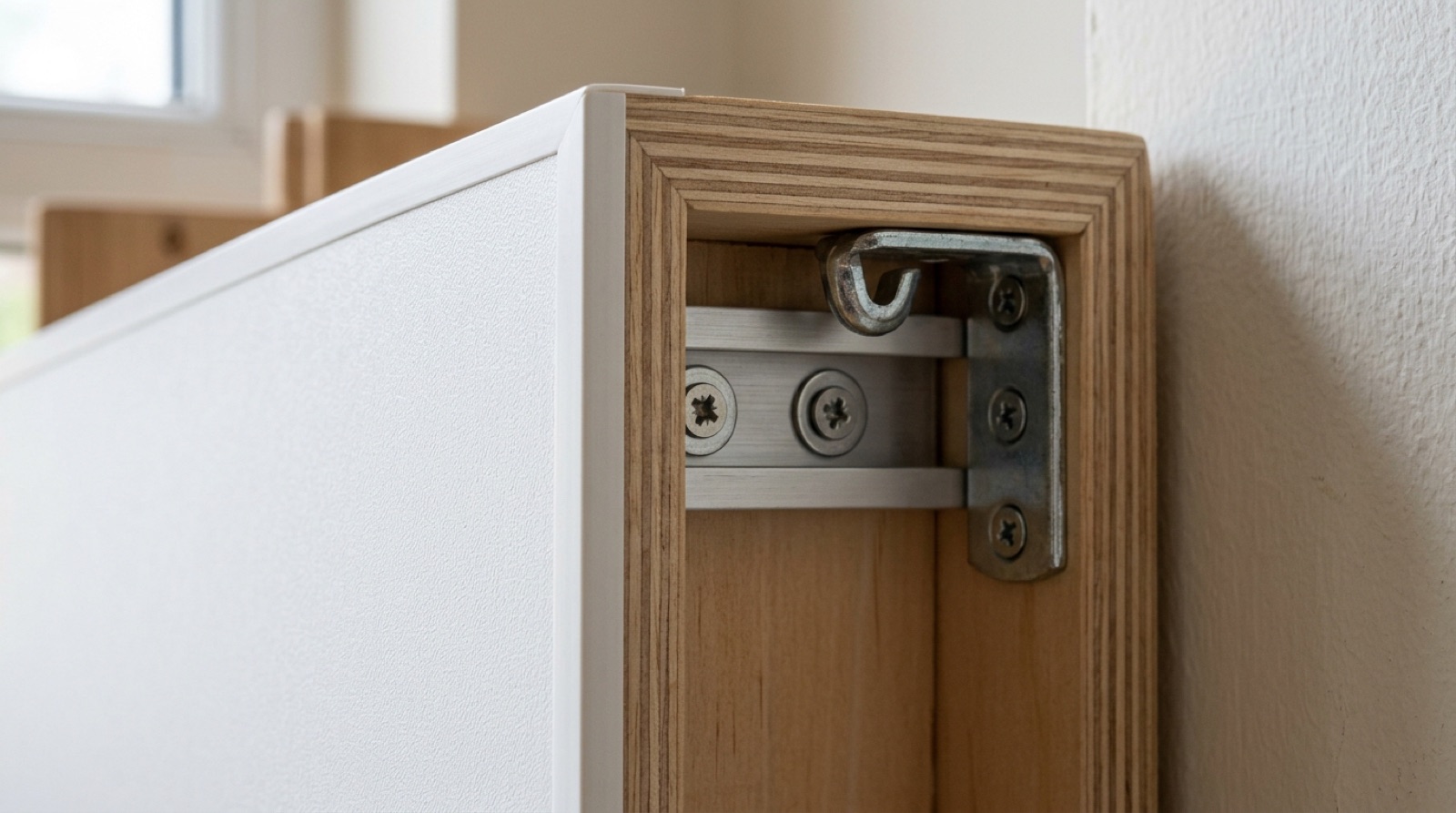
Installing lightweight wall cupboards is a great way to save floor area in small rooms, but hollow walls demand the correct fixings. Tapping a basic plastic plug into bare plasterboard will not hold a cupboard filled with kitchen mugs or pantry tins.
Finding Wooden Wall Studs with a Detector
Inside every hollow partition wall sits a hidden frame made from timber stud framing or a metal stud partition, where vertical posts are spaced at 400mm stud centres or 600mm stud spacing. Screwing directly into these vertical posts gives you the strongest anchor possible.
Use a handheld digital multi-detector stud finder to locate the edges and centers of your wall studs before drilling. Mark the stud centers with a pencil. Driving a long wood screw directly into solid timber studs provides a solid anchor that easily carries forty to sixty kilograms without loosening.
Choosing Proper Cavity Anchors for Hollow Walls
If your cabinet has to sit between studs where there is no solid timber, use heavy-duty cavity fixings designed specifically for hollow walls. Never use cheap plastic wall plugs here; they simply crumble the soft plaster core and slip out.
Instead, use metal snaptoggle anchors, fischer duotec toggle plugs, or bullfix plasterboard fixings. You push the anchor through a pre-drilled hole into the wall cavity, where the metal or nylon channel flips flat against the hidden back face of the plasterboard. When you tighten the machine bolt, the anchor clamps the wall firmly, distributing pulling weight across a wide surface so the plasterboard cannot crack.
Using a Continuous Hanging Rail to Share the Weight
When installing two or three wall cupboards side by side, fitting a continuous hanging rail or a wooden french cleat system is far safer than using separate small corner brackets. A hanging rail is a steel channel that screws horizontally across the wall, anchoring into two or three wall studs.
Once the rail is fixed firmly to your studs, you lift your lightweight wall cupboards and drop their rear brackets over the rail lip. The rail distributes weight across the entire wall run, giving you safe point load distribution rather than stressing two small wall holes. Internal adjustment screws on the cabinet brackets allow you to tweak height and depth with a screwdriver until all doors hang perfectly straight. For step-by-step guidance on fitting cabinets neatly along room walls, review our detailed piece on choosing and installing a cabinet in the living room.
Hardware and Screws That Will Not Strip Out
Because poplar ply and hollow panels have softer cores than dense hardwood, driving ordinary fine-thread drywall screws into board edges will strip the timber fibers almost instantly. Once stripped, the screw spins loosely and holds no weight.
To build strong joints in lightweight furniture board, use knock-down furniture fittings, cam-lock fittings, or threaded inserts. Threaded inserts feature coarse exterior threads that screw into a pre-drilled pilot hole in the wood, creating an internal machine-thread socket that accepts steel machine bolts. This joint can be assembled, tightened, plus taken apart repeatedly without wearing out the wood. For custom builds, pocket hole joinery paired with coarse-thread screws and wood glue creates strong ninety-degree corners, while internal corner brace blocks keep the whole cabinet square.
Squeezing Storage into Narrow Hallways Alcoves and Loft Rooms
Lightweight cupboards are ideal for tricky spots where heavy standard wardrobes simply will not fit. Narrow corridors, chimney breast alcoves, attic eaves, plus camper conversions often go wasted because people assume nothing practical will fit.
Shallow Depth Cupboards That Keep Walkways Clear
Standard wardrobes and kitchen base cabinets measure sixty centimetres deep. In a narrow hallway or small bedroom, a sixty-centimetre cabinet blocks walkways, bumps doors, plus makes rooms feel cramped.
Shallow-depth cupboards measuring twenty-five to thirty-five centimetres deep solve narrow hallway storage problems neatly. They take up minimal floor space, yet hold folded clothes, shoes, cleaning supplies, plus pantry goods. Because the shelves are shallow, items never get lost in dark back corners, making it easy to see everything at a glance.
Stepped Storage for Sloped Attic Ceilings and Campervans
Attic bedrooms and roof spaces usually have angled ceilings that make tall wardrobes impossible. Pushing a flat wardrobe into a sloped corner leaves a huge wedge of wasted space above it.
Modular cube units and lightweight plywood cabinets solve this problem by stepping down in height to match the ceiling pitch, making brilliant loft conversion furniture. In mobile vehicles, campervan conversion cupboards built with 15mm lightweight ply provide essential storage while respecting strict vehicle payload restrictions, helping you save fuel and stay within legal weight limits. If you have an unused alcove beside a fireplace, an alcove storage cabinet slides neatly into place without needing expensive custom joinery.
Sealing Raw Wood Edges in Steamy Bathrooms
If you plan to use lightweight wooden or hollow-board cupboards in bathrooms, basements, or laundry rooms, examine the panel edges. Factory flat-pack boards have sealed front faces, but bottom and rear edges are often left as bare composite timber.
Steam from showers and washing machines seeps straight into unsealed wood edges, causing the core to swell, bubble, plus push surface laminate loose. Before putting cupboards in damp rooms, iron an edge banding strip along any raw edges, or brush on a clear moisture-resistant seal. That simple step keeps your cabinets looking clean and flat for years. For more guidance on choosing home storage, read our advice on choosing quality living room storage cabinets, plus our guide on choosing and fitting modern modular kitchen cabinets.
Practical Questions People Ask About Lightweight Cupboards
Practical, simple answers to the most common questions homeowners and renters ask when shopping for lightweight storage.
Frequently Asked Questions
Are lightweight cupboards sturdy enough for daily family clothes storage?
Yes, well-made lightweight cupboards easily handle everyday family clothing. Units made from lightweight poplar plywood, hollow-board panels, or sturdy modular plastic can support fifteen to twenty kilograms per shelf without bending, which is plenty for stacks of jeans, jumpers, shirts, plus bed sheets. Just remember to spread weight evenly across the shelf rather than piling everything in one spot.
Can one person move a lightweight cupboard upstairs without help?
Most fabric and plastic modular cupboards weigh under ten kilograms, meaning one person can easily carry them upstairs either assembled or flat-packed. Lightweight wooden and metal cupboards usually weigh twelve to eighteen kilograms; while one person can carry them when empty, having a second person lend a quick hand makes guiding them through tight stair turns safer and easier.
What is the easiest way to stop a lightweight cupboard from wobbling on carpet?
Thick carpet underlay can make lightweight furniture feel slightly springy or uneven. The quickest fix is placing flat furniture shims or small wooden wedges under the front feet until the cupboard sits completely level against the wall. Joining two side-by-side units together with connector screws also creates a wider, much more stable base.
Can I paint or customize a lightweight cupboard?
Yes, you can customize lightweight wooden cupboards with paint or new door handles. Lightly sand the surface with fine sandpaper, wipe away dust, apply a quality bonding primer, plus finish with two thin coats of water-based furniture paint. For fabric or plastic cupboards, painting is not recommended, but you can swap out fabric bins or arrange modular cubes in new shapes.
How do I clean and care for lightweight fabric or plastic cupboards?
Modular plastic and metal cupboards wipe clean in seconds using warm water, mild washing liquid, plus a soft microfiber cloth. For fabric storage units, use the upholstery brush attachment on your vacuum cleaner to lift dust, then spot-clean small spills with a damp cloth and gentle soap without soaking the fabric.
Do I really need to screw a lightweight cupboard to the wall if I do not have children?
Yes, anchoring any tall freestanding cupboard is strongly recommended even in homes without children. Because the base of a lightweight cupboard is light, opening loaded doors or pulling out a heavy top drawer shifts the balance forward quickly. A single wall anchor strap provides total peace of mind and takes only five minutes to install.