Choosing Quality Living Room Storage Cabinets and Alcove Joinery
By Sarah Jenkins (BIID Associate Member | BA (Hons) Interior Architecture, Chelsea College of Arts) | October 6, 2026 | 4 min read
Editorial & Affiliate Disclosure: LUMAA HOME is reader-supported. Our editors independently research, test, and specify every material and product featured. When you purchase through retailer links on our site, we may earn an affiliate commission at no extra cost to you, in accordance with UK ASA guidelines.
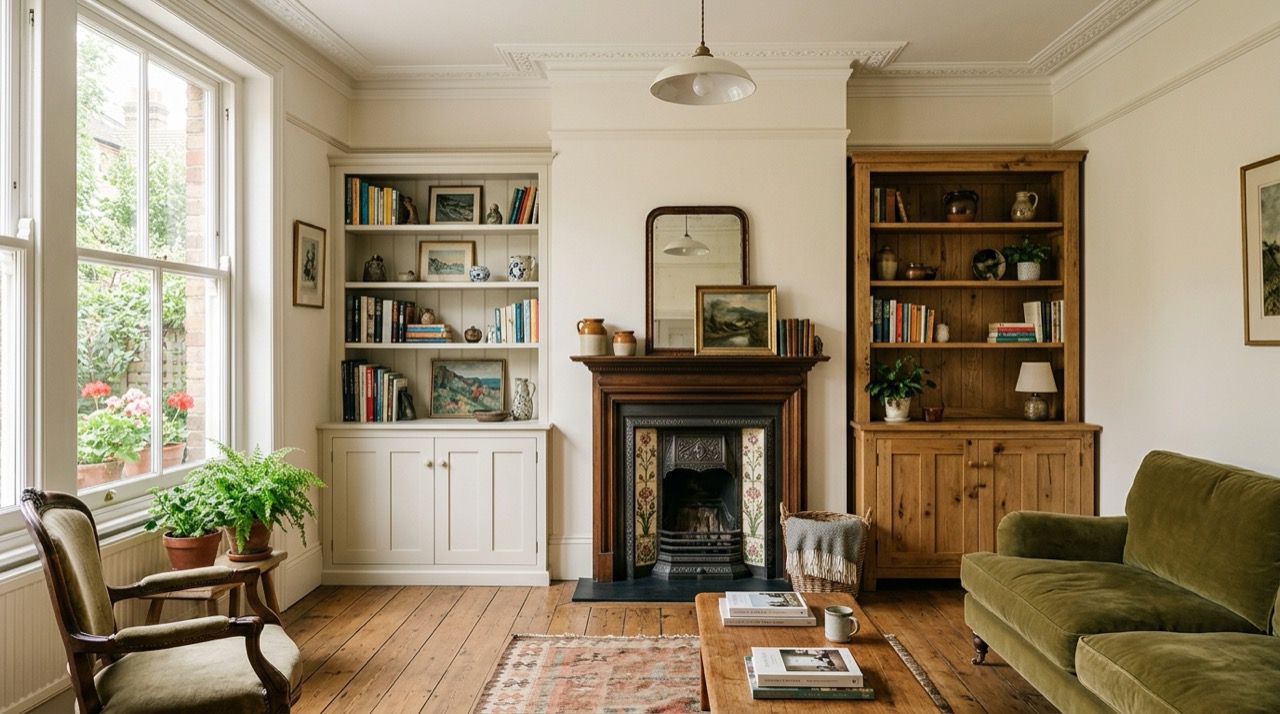
Finding the Right Living Room Storage Cabinets for Your Layout
Many British homeowners struggle to keep family sitting spaces tidy and organised throughout the changing seasons. Selecting well-proportioned living room storage cabinets helps you conceal everyday clutter while improving architectural balance and daily functionality.
Measuring Alcoves and Wall Clearances Before Ordering
Before commissioning or buying any cabinet, measure your chimney breast alcoves, skirting board depths, and ceiling height carefully. Check door swing clearances near radiators and walkways so your new sideboard or freestanding cupboard sits comfortably within the room. Before fixing heavy cabinetry into older lime-plastered masonry walls, check the moisture and ventilation guidance from Historic England so air can still circulate behind the backboard. Follow the exact joiner fixing sequence in our step-by-step guide on choosing and installing a living room cabinet.
Solid Timber vs Veneered Joinery Materials

Kiln-dried European oak and crown-cut walnut veneers offer impressive durability for busy households with children and pets. Choosing dense, well-seasoned timber ensures your cabinetry withstands daily knocks and heavy book loads without bowing over time.
Wall Anchoring and Child-Safe Stability Guidelines
Wall anchoring is essential when fitting tall bookcases or dressers inside family-friendly British sitting rooms. Follow these key installation checks for lasting peace of mind. For lightweight storage options suited to hollow walls and small alcoves, explore our guide on choosing the best lightweight cupboards for home storage:
- Use heavy-duty steel L-brackets to anchor tall units directly into solid masonry or timber studs
- Place heavier art books and ceramic platters on lower internal shelves to keep the centre of gravity low
- Inspect wall plugs and levelling feet twice a year to ensure the carcass remains plumb
Maximising Internal Shelving and Concealed Media Routing
Adjustable brass shelf pins allow you to reconfigure internal compartments as your storage needs evolve. Look for the same rigid 18mm back panels used in quality kitchen cabinet design to prevent the unit from wobbling. Pre-drilled cable ports in the rear panel also let you tuck routers and media consoles neatly inside lower cupboards.
Balancing Cabinet Proportions with Period Living Room Decor
Victorian and Edwardian reception rooms often suit painted Shaker doors paired with unlacquered brass knobs and traditional plinth detailing. Contemporary flats and open-plan extensions look sharpest with low-slung, handleless credenzas that keep sightlines open.
UK Price, Brand, and Material Comparison for Living Room Cabinets
When budgeting for living room storage, we compared off-the-shelf high-street credenzas against bespoke bench-joinery across three price tiers. Below is our studio cost and specification breakdown in GBP:
| Cabinet Tier & Supplier | Typical UK Price (GBP) | Carcass & Door Material | Best Use Case |
|---|---|---|---|
| Budget Modular (IKEA Besta / Dunelm) | GBP 120 - GBP 290 | 18mm foil-wrapped particleboard & honeycomb core | Light media storage and short-term renovations |
| Mid-Range Timber (John Lewis / Oak Furnitureland) | GBP 480 - GBP 950 | Solid oak frames withveneered MDF panels | Family sitting rooms needing durable freestanding sideboards |
| Heirloom & Bespoke (Neptune / Local BIID Joiner) | GBP 1,450 - GBP 3,200+ | Kiln-dried tulipwood in-frame doors & birch ply carcass | Chimney breast alcoves and permanent architectural storage |
Long-Term Timber Care and Hardware Maintenance
Regular dusting with a dry microfibre cloth prevents grit build-up on lacquered or oiled wood surfaces. Treat solid timber tops with natural beeswax polish once a year to nourish the grain against dry central heating during winter.
Frequently Asked Questions
How do I secure tall living room storage cabinets safely to plasterboard walls?
Always locate the vertical timber studs behind the plasterboard or use heavy-duty hollow-wall toggle anchors rated for the cabinet weight.
What is the safest way to clean oiled or painted wooden cabinetry?
Wipe surfaces gently using a soft microfibre cloth wrung out in warm water with a drop of pH-neutral soap, then buff dry immediately.
Can I repaint existing wooden living room cupboards myself?
Yes, lightly abrade the existing finish with 180-grit sandpaper, apply a high-adhesion stain-blocking primer, and finish with two coats of water-based eggshell furniture paint.
How much does a carpenter charge to build alcove cabinets in the UK?
A qualified bench joiner typically charges between GBP 900 and GBP 1,600 per alcove for a built-in base cupboard with floating bookshelves above, including priming and spraying in a trade eggshell finish.