Garden Log Burner Safety Clearances and Flue Guide
By Marcus Cole (BIID Registered Interior Designer | Former Design Director, Mayfair) | November 11, 2026 | 16 min read
Editorial & Affiliate Disclosure: LUMAA HOME is reader-supported. Our editors independently research, test, and specify every material and product featured. When you purchase through retailer links on our site, we may earn an affiliate commission at no extra cost to you, in accordance with UK ASA guidelines.
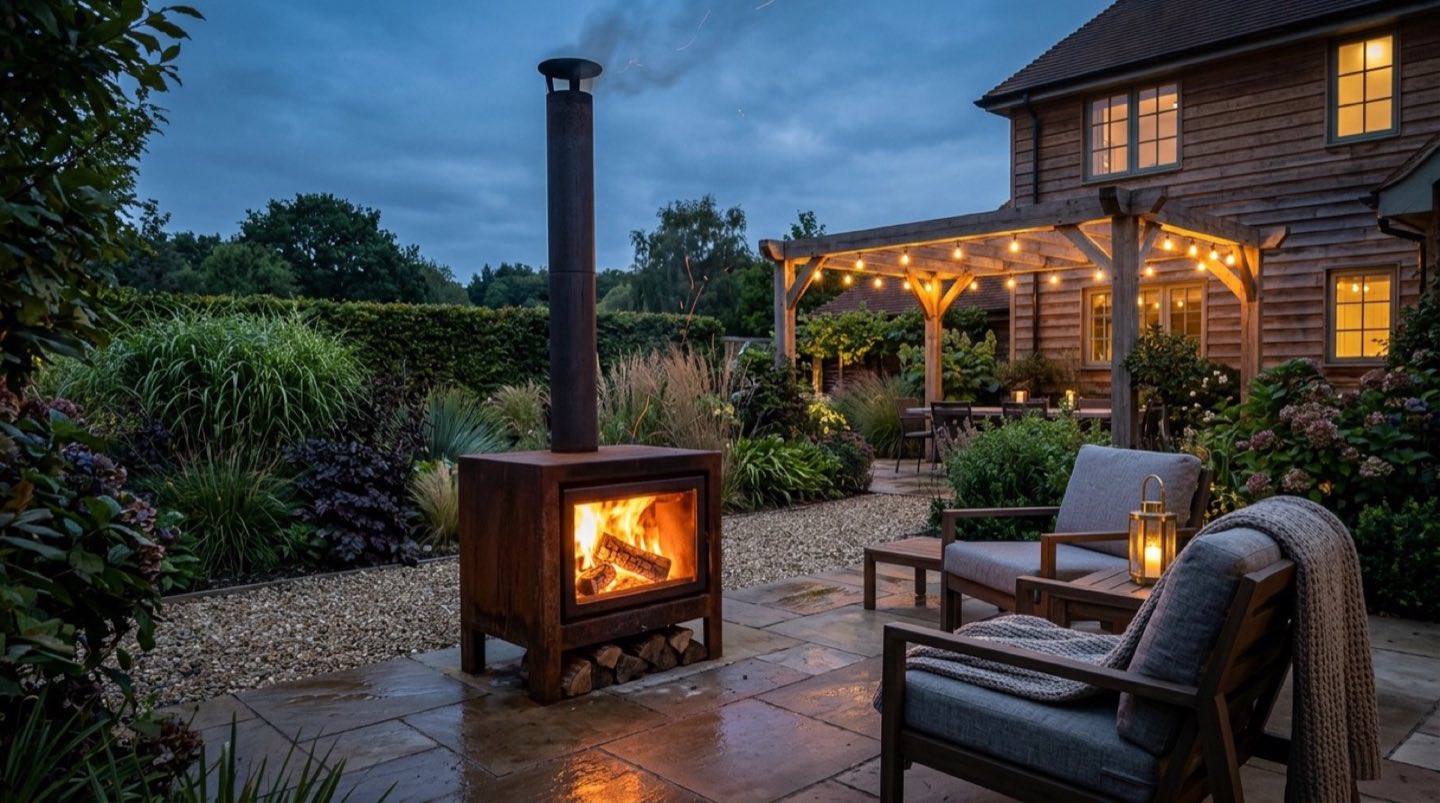
How a Garden Log Burner Actually Throws Heat Forward
An open fire bowl sends most of its heat straight up into the night sky while blowing smoke straight into whichever chair sits downwind. A proper garden log burner encloses the fire inside a metal box connected to an upright chimney pipe, pulling cold air across the embers and bouncing radiant warmth horizontally toward where people sit. If you are arranging patio seating around a stove or terrace, our guide on choosing durable garden furniture details practical clearance spacing between tables, chairs, and outdoor heat sources.
Hot combustion gases expand inside the firebox before rushing upward through the chimney flue. That rising column creates natural suction at the stove base, drawing steady fresh oxygen in through lower air slides so logs burn hotter with less smouldering.
Chimney height governs how clean a stove burns. Once a vertical flue rises at least 1.2 metres above the stove top, draw becomes stable enough to pull smoke clear above seated guests' heads. Fit a top chimney cowl sporting steel spark arrestor mesh across enclosed courtyards surrounded by overhanging conifers. The cowl keeps shifting down-gusts from pushing wood smoke back out through the door while the fine mesh catches floating red embers before they drift onto dry garden fencing.
Comparing Stove Metals: Cast Iron vs Corten vs 3mm Heavy Plate Steel
Most log burners for the garden come pressed or cast in one of three metals. Light supermarket fire baskets use 1mm thin sheet tin that buckles and rusts through inside one wet winter. Serious outdoor stoves rely on thick castings or structural steel plates built to survive repeated frost and 500-degree internal fires.
When checking the inside of any steel stove, pull open the door to look for removable vermiculite firebricks. Vermiculite insulation lines the firebox interior, bouncing intense heat straight back into flames so logs ignite cleanly without warping the outer steel casing. A raised log store compartment beneath the box lifts the glass viewing window closer to chair eye height while keeping tonight's dry ash logs stacked handy off damp patio flags.
| Stove Metal Type | Plate Gauge | Heat Retention | Rust & Cracking Behaviour | Patio Care Warning |
|---|---|---|---|---|
| Cast Iron | 6mm – 10mm thick cast sections | Holds warmth for 2 hours after embers fade | Brittle under sudden thermal shock or cold hose splashes | Brush yearly with black stove wax paste to slow orange rust |
| Corten Weathering Steel | 3mm – 4mm weathering alloy | Fast heat-up, cools promptly once wood dies | Tight rust oxide skin seals deeper steel for decades | Sheds orange rust runoff for 12 months; keep off pale stone |
| Heavy Gauge Mild Steel | 3mm body / 5mm top steel plate | Reaches working heat in under 15 minutes | Relies on high-temp silicone stove paint to resist rust | Touch up chipped paint early before winter damp creeps in |
Why Corten Stoves Stain Pale Sandstone Patios
Corten weathering steel arrives looking matte slate-grey before slowly oxidising into its deep orange-brown velvety coat over six to twelve months outdoors. That dense rust crust prevents structural metal rot completely without needing cans of spray paint. Just remember that rain passing over fresh Corten during its first year washes loose iron oxide particles straight onto surrounding slabs. Never park a brand-new Corten garden log burner directly onto cream limestone, Indian sandstone or light porcelain paving until winter rain completes that initial patina—set it over gravel borders, turf edges or dark basalt flagstones instead.
Safe Clearances on Timber Decking, Composite Boards and Fences
Standing a hot stove onto wood decking or pushing it inches from larch fence panels is where garden fires go wrong. Steel bases radiate fierce downward heat long before orange flames touch anything nearby.
Even moderate sustained warmth dries out timber cells silently over months through a chemical breakdown called pyrolysis—lowering the wood's ignition point until bare radiant warmth suddenly chars the grain. Meanwhile, plastic-wood composite decking softens, swells and blisters once surface temperatures cross roughly sixty degrees Celsius. Adding a proper hearth slab underneath blocks both falling embers and downward heat transfer.
| Garden Location / Surface | Mandatory Clearance or Pad Size | Recommended Protective Barrier | Hazard If Skipped |
|---|---|---|---|
| Timber Decking Boards | 300mm front hearth overhang / 150mm sides | 50mm stone, concrete or toughened glass hearth pad | Embers drop through board gaps and ignite joists underneath |
| Composite Plastic Decking | Minimum 50mm stove legs + solid insulated slab | Solid sandstone flagstone or thick slate paver over air gap | Polymer resins soften, blister and warp around 60C |
| Boundary Wood Fences & Sheds | 2 metres bare clearance (or shielded) | 12mm cement fibre board bolted on 25mm ceramic spacers | Radiant heat dries timber fence rails toward ignition |
| Pergola Overhead Rafters | 450mm min around single-skin flue pipe | Switch to twin-wall insulated flue (50mm–75mm air clearance) | Hot single-skin chimney tubes ignite dry canopy roofs |
How to Build a Non-Combustible Hearth Over Decking
Never stand metal stove feet directly on grooved pine deck boards. Even tall steel legs pass high heat straight downward while popping ash sparks fall vertically whenever someone prods logs with a poker. Review our related tips on garden design and outdoor seating layouts before marking out fire zones near dining sets.
- Lay a solid 50mm concrete flagstone, thick slate hearth slab or toughened glass pad flat over deck boards
- Check hearth dimensions extend at least 300mm forward from the stove door and 150mm beyond both sides and back
- Ensure stove legs preserve a 50mm ventilated gap beneath the ash pan so heat dissipates before hitting the stone
- Close open seams between slab joints tight so red coals never trickle down between gaps onto dry joists below
Fitting a Garden Log Burner Safely Under a Covered Pergola
Installing a log burner garden stove underneath a timber shelter or polycarbonate lean-to keeps autumn drizzle off your shoulders, yet venting hot gases straight beneath wooden rafters demands indoor-grade chimney parts.
Never trap wood smoke under a roof canopy or run hot single-skin black stovepipe close to dry structural joists. Once heated past five hundred degrees inside the chamber, plain single-wall flue pipe glows hot enough to set roof timber ablaze across up to 450mm of empty air. Any flue rising through a pergola roof must convert cleanly to a twin-wall insulated stainless steel chimney above stove height.
- Transition from single-skin stove pipe to insulated twin-wall stainless steel flue well below roof rafters
- Maintain the strict 50mm to 75mm perimeter air gap required around twin-wall pipe passing through timber framing
- Seal roof holes with a vented metal firestop spacer bracket plus high-temperature silicone flashing boot against rain
- Keep at least two full pergola walls open to outdoor breeze at all times to stop silent carbon monoxide accumulation
- Terminate the cowl above the highest roof apex edge so wind never pushes smoke eddies back under the canopy
Curing New Stove Paint Without Smoke Blisters or Chemical Smells
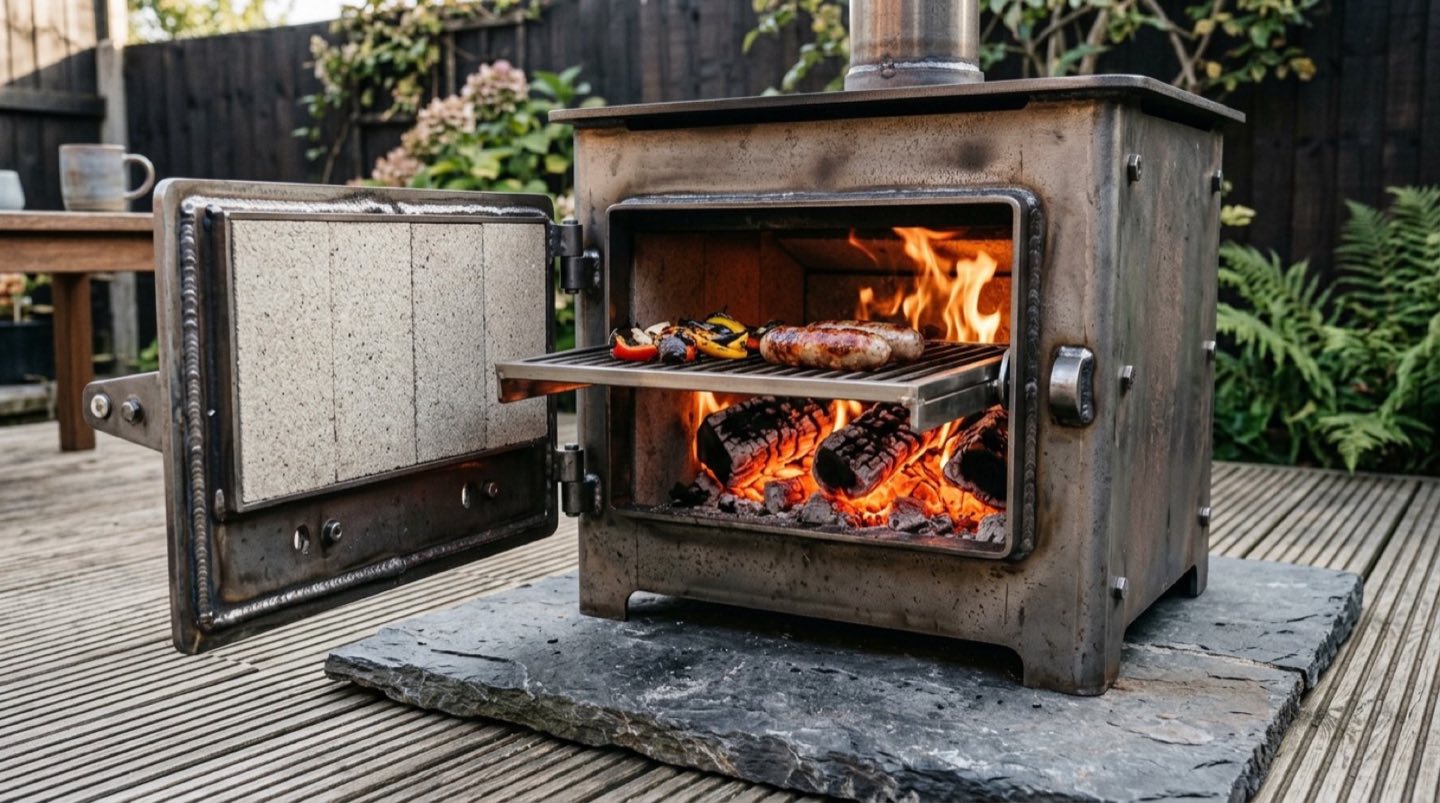
High-temperature exterior coatings on new painted garden log burners (rated up to 650 degrees Celsius with Silicone-resin pigments such as Stove Bright or Vitcas) arrive green and slightly soft out of the carton. Lighting a roaring oak blaze straight away boils trapped paint solvents into ugly orange blisters.
Outdoor builders cure fresh stove paint using stepped gentle heat cycles. Expect thin white acrid smoke and a sharp resin smell around 200 degrees Celsius while chemical binders cross-link permanently onto raw steel—another reason why curing must take place outdoors in fresh breeze rather than under closed canopies. Follow the three-stage heating table below, using small dry split sticks lit top-down so chimney pipe draught wakes up cleanly.
| Paint Curing Step | Fuel Load | Target Stove Temp | Burn Window | Required Cooldown |
|---|---|---|---|---|
| Stage 1: Initial Warm | Handful of thin dry softwood kindling | 120C – 150C gentle warmth | 15 to 20 minutes | Let steel cool cold to touch |
| Stage 2: Binder Bake | One small split log + wax firelighter | 200C – 230C medium heat | 30 to 45 minutes | Cool down completely again |
| Stage 3: Full Cure | Two normal seasoned hardwood logs | 300C+ steady ember bed | 60 minutes normal burn | Finish complete; coating is hardened |
UK Clean Air Act Smoke Rules, Abatement Fines and Proper Logs
Homeowners living in city Smoke Control Areas often worry about legal smoke limits. Under UK DEFRA guidelines, freestanding movable garden appliances (chimineas, fire pits and freestanding garden log burners not hooked to a building chimney) sit outside domestic chimney smoke restrictions.
Watch one crucial legal trap: running a fixed stove chimney permanently through a summerhouse wall, timber log cabin or insulated garden room turns your burner into a fixed building flue inside a Smoke Control Area—meaning you legally require a DEFRA-exempt indoor stove burning certified smokeless wood or fuels.
Even open patio fires fall strictly under local council checks. If thick acrid smoke rolls repeatedly across a neighbour's open washing or bedroom window, councils issue Statutory Nuisance Abatement Notices under the Environmental Protection Act 1990, carrying potential magistrates' court fines reaching five thousand pounds. Preventing bad smoke starts cleanly at your wood rack:
Never Toss Scrap Wood Inside: Treated tanalised fence panels, painted door timber and pallet chips smoke heavily while spewing chemical preservatives and copper chrome arsenic fumes into your patio seating. Burn clean natural kiln dried hardwood carrying the Ready to Burn certified stamp holding under 20 percent internal moisture.
Pick Dense Hardwoods Over Pine: Dense ash, silver birch, oak and seasoned beech light steadily, spit minimal sparks and build long-lasting bright glowing coals. Cheap resinous garden offcuts spit sharp hot cinders across clothing before turning to grey dust inside ten minutes. Keep spare stacks off damp lawn soil inside a ventilated shed—compare timber storage and weatherproofing tips alongside crafting durable outdoor worktops or splash protection using heat-resistant wall surfaces.
Planchas, Swing Grates and Baking Pizza Over Your Stove
Several mid-to-heavyweight garden stoves ship with flat steel top plates, welded side lugs or removable fire grates designed specifically for outdoor cooking over fading hardwood coals.
1. Hot-Ring BBQ Planchas: Heavy 6mm carbon steel griddle rings clamp snug around bottom flue pipes, dividing cooking zones naturally between searing steak heat near the hot collar and slow pepper or onion browning toward cooler outer rims. Lightly wipe cool plates clean with paper towel plus a thin coat of vegetable oil after every cookout so atmospheric damp never settles.
2. Internal Swing Cooking Grates: Cast-iron or stainless rod swing arms hook inside door hinges so you let split beech burn completely down into deep glowing orange coals, swivel the grate in over clean heat, grill skewers safely wearing leather welding gauntlets, then lift cooked food cleanly aside.
3. Upper Oven Compartments: Integrated wood-fired pizza chambers float an insulated baking deck directly above firebox flames. Firebrick roofs wrap convective heat down onto thick cordierite pizza stones reaching roughly 400 degrees Celsius inside fifteen minutes for fast crispy crusts.
Clear cold white wood ash out regularly after complete cooldowns. Moist left-behind wood ashes turn mildly alkaline and corrosive when mixed with rainwater, eating tiny pinholes straight through thin steel ash pans over wet months.
Chiminea vs Box Stove plus Winter Rust Maintenance
People torn between slim clay chimineas and rectangular steel log burners for the garden usually overlook fuel savings and heat spread. Open terracotta chimineas warm knees cleanly on quiet calm evenings, yet clay fractures violently if struck by rain showers while red hot. Tall steel box stoves sporting glass doors and upper airwash intake slots recycle secondary combustion air cleanly across viewing glass, doubling active radiated warmth per log burned while cutting wasted firewood roughly in half.
To make steel units outlast ten tough UK winters, brush stubborn ash buildup off hinges each October, inspect firebricks for split corners, mist bare bolts gently with heatproof aerosol paint once cool then slip a vented breathable cover down over dry metal (checking our notes on weatherproof masonry and garden sculpture placement in our garden ornaments care guide). Avoid tight plastic dustbin bags wrapped directly over cold steel—trapped humid condensation rusts unpainted joints rapidly beneath black plastic sheets.
- Clear wet rain-soaked ash promptly out of ash pans so alkaline wood salts never pit steel floors
- Check glass door rope gasket cords every autumn and re-glue frayed seals using stove cord adhesive
- Wire-brush surface orange spots lightly before respraying touch-up coats with 650C aerosol paint
- Cover dried cold stoves using loose vented outdoor canvas covers rather than air-tight polythene tarps
Frequently Asked Questions
Can I put a garden log burner directly onto wooden or composite decking?
No. Radiant heat downwards and popping sparks from a garden log burner pose an immediate fire risk on timber decking, while composite boards soften and warp around 60 degrees Celsius. Set the stove on legs with a 50mm air gap atop a solid 50mm stone, concrete or toughened glass hearth slab extending 300mm in front of the door and 150mm on each side.
How far should a garden log burner sit from wooden fences or sheds?
Maintain a minimum clear safety distance of 2 metres between the hot stove casing and wooden boundary fences, dry garden sheds or overhanging conifer foliage. In tight patios with narrow margins, screw a 12mm non-combustible cement fibre heat board onto 25mm ceramic spacers against fences to intercept radiant heat.
Can you put an outdoor log burner underneath a wooden pergola roof?
Yes, provided hot smoke vents safely through the roof via an insulated twin-wall stainless steel flue keeping a 50mm to 75mm clearance away from timber framing (never run hot single-wall flue through wood). Pair twin-wall pipes with proper silicone roof flashing boots and leave at least two pergola sides open for carbon monoxide safety.
Are garden log burners legal in UK Smoke Control Areas?
Freestanding movable outdoor garden log burners sit exempt from Clean Air Act indoor chimney rules in UK Smoke Control Areas—unless connected via a fixed chimney to a building such as a garden cabin. Even outside indoor rules, councils can enforce fines up to £5,000 for nuisance smoke under the Environmental Protection Act 1990, so always burn dry Ready to Burn logs under 20% moisture.
How do you cure new stove paint on a garden log burner without blistering?
Cure fresh 650C high-temperature stove paint outdoors over three gentle stepped burns: start with 15 to 20 minutes of gentle kindling heat around 120C–150C then cool completely, burn a medium small log fire for 45 minutes around 200C–230C then cool completely, before running a normal hot fire. Stepping heat slowly prevents trapped solvents bubbling.
Why does Corten steel rust water stain pale patio slabs?
Corten weathering steel develops its protective rust skin gradually across six to twelve months of UK rain, washing loose iron oxide particles onto pavers underneath. Keep fresh Corten burners positioned on gravel beds, grass borders or dark slate rather than pale sandstone or light porcelain until that oxide skin settles.