Designing a Modern Cottage Garden: Complete Planting Guide
By Clara Davenport (RIBA Affiliate | MSLL (Society of Light and Lighting) | BArch (Hons)) | October 17, 2026 | 7 min read
Editorial & Affiliate Disclosure: LUMAA HOME is reader-supported. Our editors independently research, test, and specify every material and product featured. When you purchase through retailer links on our site, we may earn an affiliate commission at no extra cost to you, in accordance with UK ASA guidelines.
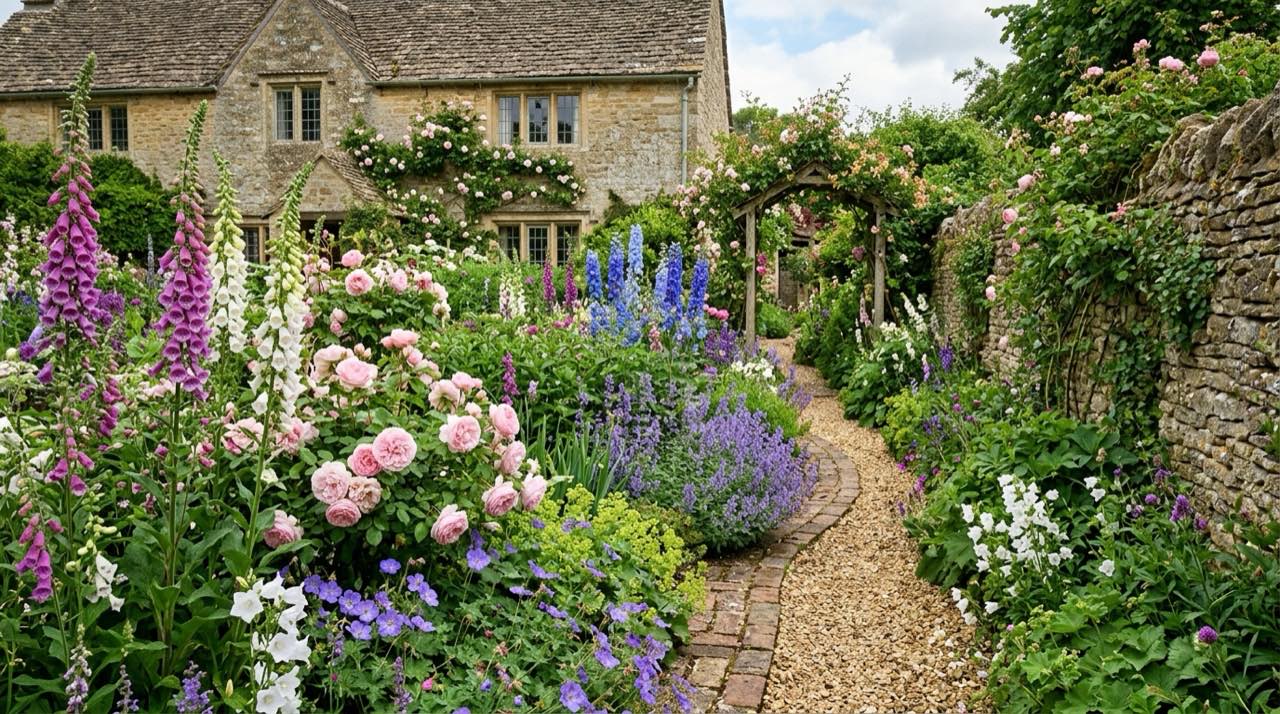
Planning a British Cottage Garden: Key Principles
Traditional British cottage gardens were originally practical plots where families grew herbs, fruit, and hardy flowering plants together in a relaxed, informal layout. Today, the style remains popular across the UK because it creates full, colourful borders that look natural rather than strictly landscaped.
The key to a successful cottage garden is planting closely so that foliage weaves together, leaving little bare soil for weeds. Combining long-lived perennials with easy self-seeding flowers gives you continuous colour from late spring until autumn.
Local weather across Britain makes a big difference to how plants perform. In milder coastal areas like Cornwall or Devon, plants rarely face heavy frosts, but salt-laden winds require sturdy varieties like rosemary and shrubby hydrangeas. In northern England, Scotland, or the Midlands, winters can bring temperatures well below -10°C, meaning perennials like peonies, cranesbill geraniums, and hardy delphiniums are much safer choices.
Preparing the Soil: Heavy Clay and Sandy Beds
Healthy soil is the foundation of any long-lasting garden border. British soils vary widely, from the dense, wet clay common in the Midlands and Home Counties to the thin, fast-draining chalk soils across the South Downs.
Most cottage garden favourites—including peonies, delphiniums, and shrub roses—do best in fertile soil with a near-neutral pH between 6.2 and 7.0 that retains moisture in summer without sitting waterlogged in winter.
If you have heavy clay, dig down about 300mm in autumn or early spring, working in a 50mm layer of well-rotted manure alongside 25mm of sharp horticultural grit to open up drainage. For light, sandy soil that dries out quickly, dig in generous amounts of garden compost and leaf mould to help hold water around roots.
Finishing your beds with a 75mm layer of bark mulch each autumn keeps weeds down, protects plant crowns from hard frosts, and cuts down on summer watering.
How to Layer Cottage Garden Plants by Height
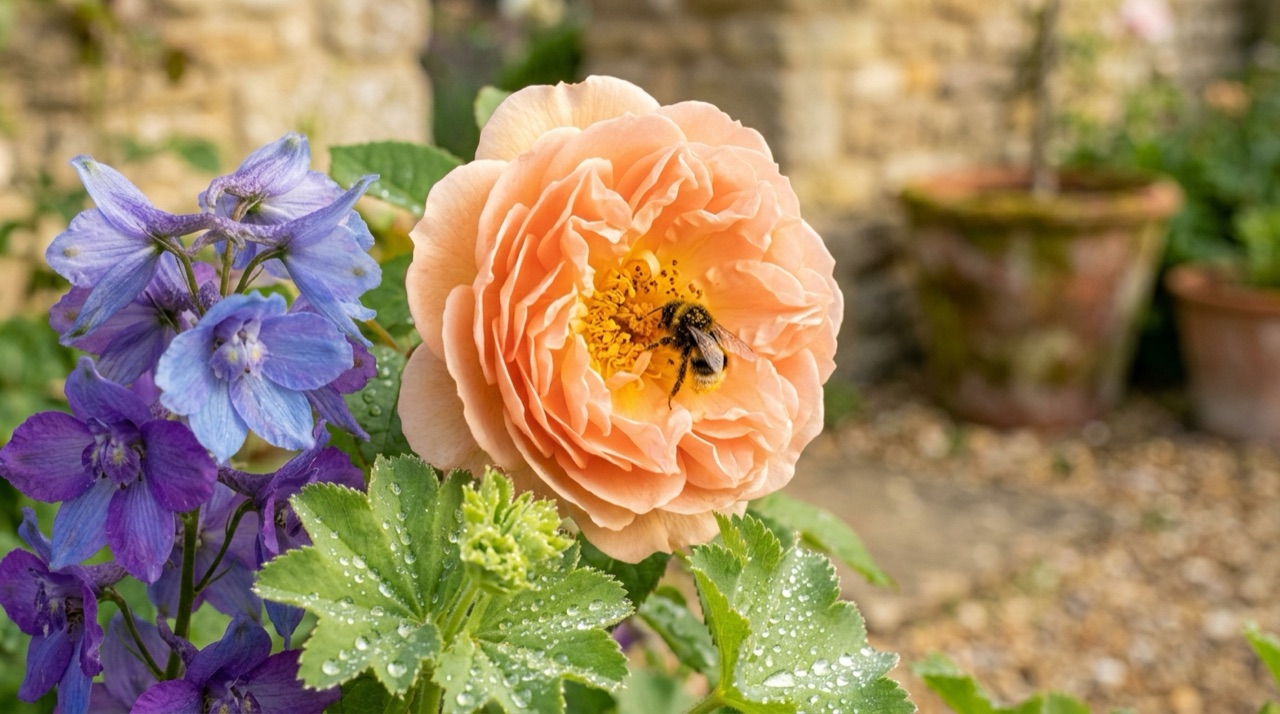
To keep a 10m x 2m border looking balanced all summer, arrange your plants in tiers from back to front. If you plant tall spires right next to low spreaders without intermediate heights, the border can end up looking messy once growth peaks in July.
Tall plants (1.5m to 2.4m) belong at the back against fences or brick walls. Mid-height perennials (80cm to 1.2m) form the main body of the border, while compact varieties (40cm to 70cm) fill the lower third. Finally, low-growing edgers (10cm to 30cm) soften the front edge and spill over onto stone paving or lawns.
When selecting plants, consider open-flowered varieties that welcome local pollinators. The Royal Horticultural Society (RHS) recommends planting single-bloom flowers so bees and hoverflies have easy access to pollen and nectar from early spring right through to October.
- Back of Border (1.5m–2.4m): Tall delphiniums, common foxgloves (Digitalis purpurea), verbascum, and climbing roses on trellises.
- Mid-Border (80cm–1.2m): David Austin shrub roses, herbaceous peonies ('Sarah Bernhardt'), coneflowers (Echinacea), and hardy phlox.
- Front-Mid Fillers (40cm–70cm): Masterwort (Astrantia major), columbine (Aquilegia), purple salvia ('Caradonna'), and bearded irises.
- Front-Edge Spillers (10cm–30cm): Lady's mantle (Alchemilla mollis), cranesbill geranium ('Rozanne'), lamb's ear (Stachys byzantina), and English lavender.
Reliable Perennials for English Borders
Hardy perennials form the permanent backbone of a cottage garden, coming back year after year with little fuss. Shrub roses from breeders like David Austin (such as 'Olivia Rose Austin' or 'Gabriel Oak') are particularly good because they repeat-flower all summer and show strong resistance against black spot.
Pair these roses with vertical flower spikes like delphiniums and foxgloves to add height between rounder shrubs and mounds of foliage.
Herbaceous peonies (Paeonia lactiflora) are another classic choice. They need deep, rich soil, but take care when planting: keep the crown eyes no more than 25mm to 50mm beneath the soil surface. Planting them too deep is the main reason peonies fail to flower.
Underneath, hardy cranesbill geraniums like Geranium 'Rozanne' make excellent ground cover, flowering continuously from late May until the first frosts in November while shading out weed seeds.
Self-Seeding Flowers That Fill in Gaps Naturally
Self-seeding annuals and biennials give cottage gardens their relaxed, informal charm. Plants like columbine (Aquilegia), pot marigolds (Calendula), borage, field poppies, and love-in-a-mist (Nigella damascena) drop seeds directly onto bare ground, popping up in small gaps between larger perennials.
To keep them from taking over the bed, take a few minutes in late spring to thin out seedlings around established plants. Use a small hand fork to leave about 150mm of clear space around the main crowns of your perennials.
Hopping out extra seedlings early in the season lets you keep the garden under control while still enjoying colourful, natural drifts of self-sown flowers.
Adding Evergreen Shrubs and Trellises for Winter
One common issue with traditional cottage borders is that they look bare in winter when herbaceous stems die back to the ground. Adding a few evergreens, climbing supports, and decorative seed heads keeps the space looking attractive during colder months.
Planting small evergreen cones—such as English yew (Taxus baccata) or box alternatives like Ilex crenata—every couple of metres gives the eye something green and structured to rest on all year round.
You can also install rustic hazel obelisks or steel plant supports (about 1.8m tall) for climbers like honeysuckle (Lonicera) and summer clematis (Clematis viticella).
Leave the dried seed heads on coneflowers, phlox, and sedums over winter rather than cutting them down in autumn. They look striking covered in frost and provide natural food for visiting goldfinches and sparrows.
Plant Costs and Where to Buy in the UK
The cost of planting a typical 10m x 2m (20m²) border depends on the size of the plants you choose. Buying bare-root perennials and roses during the dormant season (between November and March) is much cheaper than buying large potted containers in late spring.
A practical rule of thumb is to spend roughly 60 percent of your budget on main perennials, 25 percent on structural shrubs or climbing supports, and 15 percent on soil conditioners, compost, and mulch.
If you are planning stone edging, gravel paths, or raised timber retaining walls alongside your beds, checking a step-by-step guide on crafting a stunning garden border will help you sort out drainage, edging trenches, and gravel foundations before you start planting.
| Specification / Material Tier | 2026 UK Price Range (GBP) | Recommended UK Suppliers | Load / Durability & Best Use |
|---|---|---|---|
| Tier 1: Bare-Root & Seed Starter (20m² Border) | £180 - £280 total | Thompson & Morgan, Dobies, Sarah Raven | Economical option; requires 2-3 growing seasons to establish full mature density. |
| Tier 2: Standard 9cm & 2L Container Combination | £450 - £750 total | Crocus, RHS Partner Nurseries, B&Q | Balanced approach; gives immediate volume in Year 1 with optimal root establishment. |
| Tier 3: Mature Plants & Evergreen Topiary | £1,200 - £2,100 total | Architectural Plants, Majestic Trees, Local Trade Nurseries | Instant architectural structure using 10L-15L yew cones, espaliered apples, and mature roses. |
Protecting Plants from Slugs, Snails, and Mildew
The British climate brings plenty of wet weather and warm summer spells, which can lead to fungal issues like powdery mildew and rust. Hollyhocks are especially prone to rust on their lower foliage.
To reduce mildew and rust, give plants enough breathing room—aim for at least 450mm of space between clumps—and pick off any infected lower leaves as soon as you spot yellow or orange spots.
Slugs and snails are another regular nuisance, particularly when tender new delphinium and hosta shoots emerge in spring. Rather than using harsh chemical pellets that can poison garden wildlife, apply biological nematode treatments (Phasmarhabditis hermaphrodita) in April and September when the soil is warm and moist. Nematodes hunt slugs underground and keep populations in check without risking birds, frogs, or hedgehogs.
Year-Round Maintenance and Pruning Schedule
Looking after a cottage garden takes regular, simple jobs through each season to keep plants flowering strongly:
• Spring (March to May): Spread a 50mm layer of peat-free compost or manure over beds. In late May, carry out the Chelsea chop on tall perennials like heleniums, sedums, and phlox by cutting back stems by one-third with sharp secateurs to encourage bushier growth and later blooms.
• Summer (June to August): Deadhead spent rose blossoms and sweet peas weekly to trigger fresh buds. Tie delphiniums and tall spires to hazel stakes before heavy summer rainstorms knock them over.
• Autumn (September to November): Plant bare-root roses, divide congested perennial clumps with two garden forks back-to-back, and apply a fresh layer of bark mulch to insulate roots.
• Winter (December to February): Check plant supports and trellises in windy weather, leave attractive seed heads standing for wildlife, and prune back late-summer flowering clematis down to healthy lower buds in February.
Frequently Asked Questions
How do I control powdery mildew on cottage garden perennials naturally?
Prevent powdery mildew by improving air circulation around foliage and mulching roots to maintain soil moisture. Spray affected leaves with a organic solution of 5g potassium bicarbonate per litre of water every 10 days during hot, humid weather.
What is the best time to perform the Chelsea Chop on herbaceous plants?
Perform the Chelsea Chop in late May during the week of the RHS Chelsea Flower Show. Cut back selected mid- and late-summer flowering perennials by one-third to one-half using sharp bypass secateurs to promote bushier growth and delayed, sturdier blooms.
Which cottage garden plants are most resistant to heavy clay soil?
Hardy cranesbill geraniums, *Astrantia major*, *Alchemilla mollis*, and *Paeonia lactiflora* thrive in heavy clay soils provided organic matter is incorporated. Ensure beds are not submerged in standing water during winter by digging in coarse horticultural grit prior to planting.
How deep should bare-root roses be planted in autumn?
Plant bare-root roses so that the graft union (the swollen join between the stem and roots) sits exactly 25mm below the soil surface line. Dig a hole roughly 400mm wide by 300mm deep, backfilling with soil mixed with well-rotted manure and mycorrhizal fungi.
How do I prevent digitalis and aquilegia from choking out other flowers?
Thin out self-sown seedlings in early April using a hand weeding fork, maintaining a minimum spacing of 150mm to 300mm between plants. Remove seed heads before they shatter in late summer if you want to restrict spread completely.