Selecting Kitchen Worktops: Quartz, Solid Oak, and Natural Stone
By Oliver Sinclair (City & Guilds Level 3 NVQ Advanced Bench Joinery | Member of the Institute of Carpenters (MICarp) | Heritage Crafts Association (HCA)) | September 15, 2026 | 7 min read
Editorial & Affiliate Disclosure: LUMAA HOME is reader-supported. Our editors independently research, test, and specify every material and product featured. When you purchase through retailer links on our site, we may earn an affiliate commission at no extra cost to you, in accordance with UK ASA guidelines.
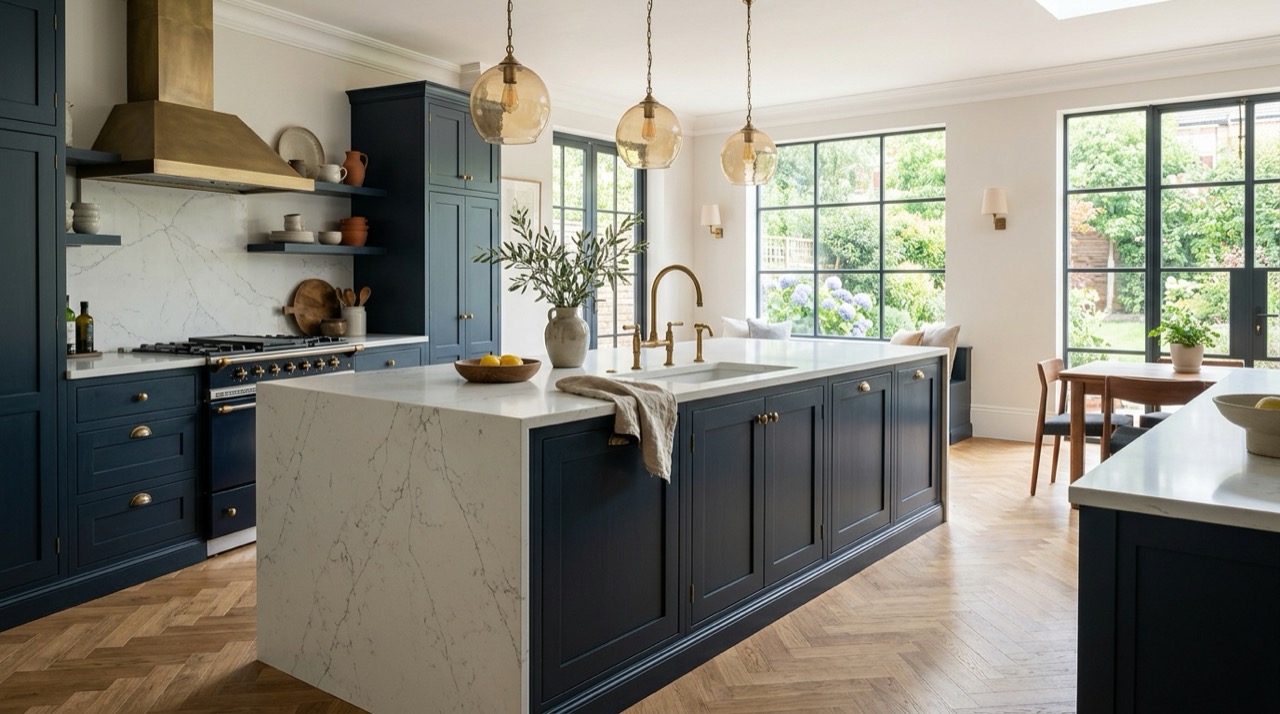
Mastering Kitchen Worktops Material Engineering
Selecting structural surfaces for culinary environments requires a careful balance between dynamic tensile resilience and authentic aesthetic character. Modern kitchen worktops must withstand substantial loads, aggressive localized impacts, and rapid thermal shifts on a daily basis.
Specifying a solid 30 millimetre slab provides superior structural rigidity over base cabinetry, successfully minimizing deflection risks across expansive breakfast bar spans exceeding 1200 millimetres without requiring intermediate vertical steel legs.
Sub-floor stability remains vital when installing heavyweight surface materials like granite or engineered quartz. Standard British home installations assume maximum sub-floor deflection tolerances strictly below 1 in 360 over total span length.
Carcass subbases must be perfectly level to within 1 millimetre per metre using heavy-duty adjustable feet, ensuring structural weight distributes evenly to prevent hairline fractures along routed hob cutouts and undermount sink reveals.
Material choices directly dictate long-term maintenance schedules and performance in busy residential kitchens. High-density quartz composites containing 90 percent natural quartz combined with polymer resins offer exceptional stain resistance and non-porous hygiene benefits.
Conversely, natural stone like marble demands high-performance penetrating silicone sealers applied annually to protect against acidic etching caused by citrus, vinegar, and red wine routinely present during food preparation.
Selecting Quartz and Natural Stone Formulations
Engineered quartz slabs are manufactured using specialized vibration vacuum compaction, creating an extraordinarily dense surface material with flexural strength exceeding 45 megapascals. This structural integrity allows for slender 20 millimetre profiles while maintaining high resistance against chipping during heavy domestic use.
Master fabricators utilize diamond CNC routing tools to achieve tight tolerances around cutouts, preserving a crisp 5 millimetre shadow line along perimeter cabinetry.
Thermal shock remains a major technical consideration when specifying natural stone surfaces in modern kitchens. Direct exposure to hot cookware exceeding 180 degrees Celsius can trigger rapid localized thermal expansion, leading to irreversible stress fractures.
Incorporating recessed stainless steel trivet rods or designated heat pads into the surface layout effectively mitigates thermal damage, safeguarding both stone matrix and resin structures for decades of active culinary operation. Ensure your underlying cabinet boxes feature 18mm high-density gables and solid top stretcher rails capable of supporting 75kg stone loads using our kitchen unit carcasses sizing and load guide. When planning plumbing or electrical alterations in a kitchen, check UK Building Regulations Part P and Part H guidance on the official Planning Portal.
- Minimum 30 millimetre depth for unsupported breakfast bar cantilever spans up to 300 millimetres
- Penetrating fluoro-chemical sealer application for porous natural marble surfaces every twelve months
- Precision diamond cutouts leaving a minimum 60 millimetre border from carcass edge boundaries
- Polished pencil round edge profile delivering smooth 3 millimetre radius impact protection
Timber Specifications for Traditional Kitchen Worktops
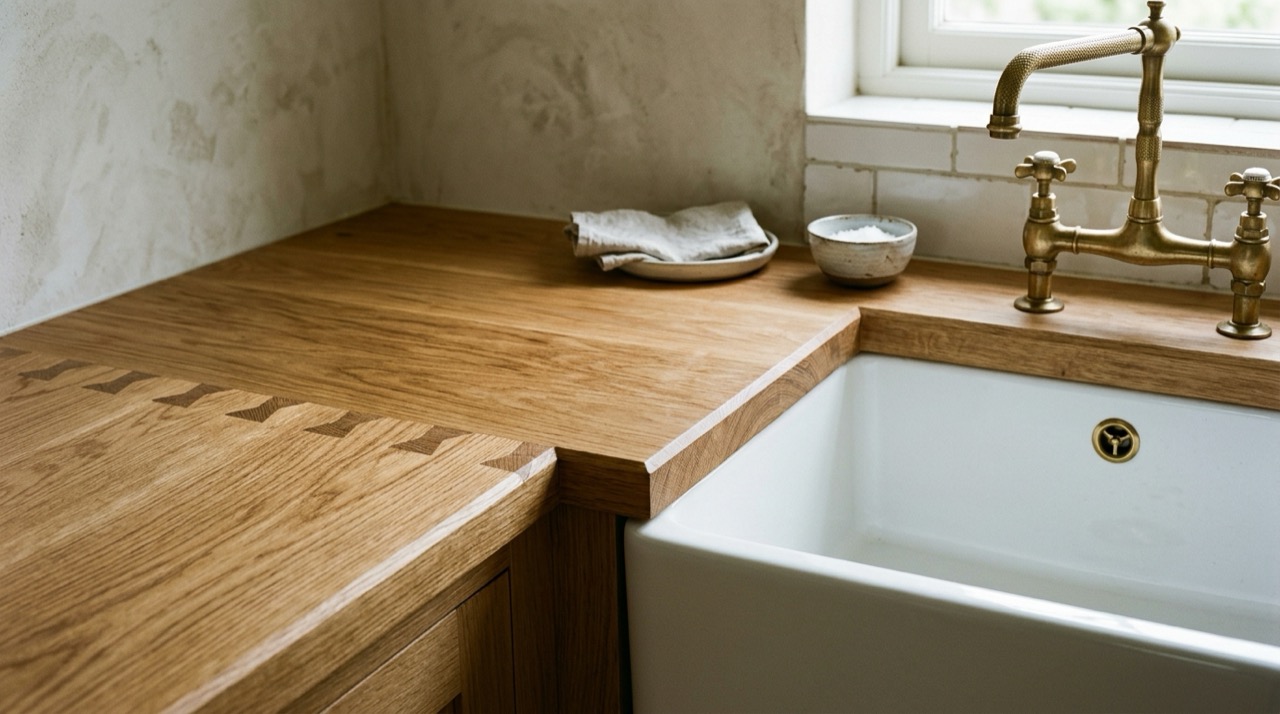
Solid hardwood surfaces bring rich tactile warmth and organic character into contemporary interior schemes. Prime European oak and American walnut remain premier choices for kitchen worktops due to their tight cellular grain structure and Janka hardness ratings exceeding 6000 Newtons.
End-grain block butcher stations offer superior knife resistance, self-healing under heavy blade pressure while preserving delicate sharp edges on fine culinary cutlery during routine daily preparation.
Timber responds dynamically to ambient atmospheric moisture shifts within modern residential spaces. Maintaining indoor relative humidity consistently between 45 and 60 percent prevents excessive seasonal timber movement.
Staves measuring 40 millimetres in width are kiln-dried down to 8 percent moisture content before finger-jointing, ensuring long-term dimensional stability. Underside surfaces require moisture barrier aluminum foil above dishwashers to block rising steam and prevent upward cupping.
Precision Edge Profiles and Structural Overhangs
Perimeter edge fabrication defines both user safety and tactile interaction along worktop perimeters. Arris and pencil round profiles remove sharp 90 degree corners, replacing them with smooth 2 to 3 millimetre radii that significantly reduce chipping risks while softening architectural geometry.
For classic heritage schemes, delicate Ogee and DuPont edge details provide timeless layered mouldings, requiring meticulous hand-finishing with fine silicon carbide abrasives. Cutouts for an undermount kitchen sink must be sealed with silicone to stop water seeping into timber cores.
Managing extended cantilevered overhangs for island seating zones demands exact engineering and structural planning. Overhangs exceeding 250 millimetres in 20 millimetre quartz require hidden steel support brackets recessed into carcass gables.
These concealed 6 millimetre flat steel bars transfer vertical live loads directly back into cabinet frames, ensuring complete stability when users lean on worktop edges without compromising comfortable knee clearance below.
Long-Term Care for Kitchen Worktops and Surfaces
Preserving the factory finish of solid timber work surfaces involves consistent maintenance routines. Applying a food-safe hardwax oil based on natural vegetable oils and waxes seals timber pores against moisture ingress.
Initial installations require four coats, applied lightly with fine scuff pads, followed by bi-annual reoiling around sink cutouts where water exposure remains highest throughout daily kitchen activities over the years.
Routine cleaning of engineered worktops requires neutral pH detergent solutions to avoid stripping protective surface sealants or dulling polished finishes. Abrasive scouring pads and harsh alkaline cleaners above pH 10 degrade resin binders in quartz surfaces, creating micro-pitting that permanently traps organic dirt.
Microfibre cloths paired with warm water reliably maintain pristine surface luster while protecting underlying structural material integrity.
Handling accidental scuffs or stubborn surface staining requires material-specific restoration methods. Minor scratches on solid timber can be locally sanded with 240-grit sandpaper along the grain direction before reapplication of hardwax oil.
Polished natural stone surfaces require professional diamond paste buffing to lift deep-seated stains and restore factory sheen, preserving architectural value over extended residential lifespans.
UK Cost, Brand, and Specification Breakdown
Before ordering materials, compare trade and retail pricing across established UK suppliers so you can balance upfront cost against long-term durability:
| Specification Tier | Typical UK Price Range (GBP) | Recommended Trade Suppliers | Expected Service Life |
|---|---|---|---|
| Entry Trade Specification | GBP 65 - GBP 150 | Screwfix, Toolstation, B&Q GoodHome | 5 to 8 years |
| Mid-Range Residential | GBP 180 - GBP 420 | Howdens, Wickes, DIY Kitchens, Franke | 10 to 15 years |
| Architectural & Bespoke | GBP 480 - GBP 1,200+ | Shaws of Darwen, Perrin & Rowe, Quooker | 20+ years |
Acoustic and Thermal Performance in Modern Kitchens
Acoustic comfort in open-plan kitchen spaces is significantly influenced by surface density and material selection. Heavy natural stone and quartz surfaces effectively dissipate high-frequency impact noises from cutlery and cookware through structural mass.
Pairing 30 millimetre thick stone slabs with acoustic dampening underlayment ribbons along cabinet rails reduces reverberation noise levels across contiguous dining and living zones by several measurable decibels.
Thermal conductivity varies markedly between worktop materials, affecting ambient touch comfort during food preparation. Timber surfaces possess low thermal conductivity, feeling naturally warm to the touch year-round, whereas stone surfaces act as thermal sinks, drawing ambient heat away.
Integrating subtle under-counter heating panels beneath cold stone seating overhangs creates welcoming, cozy breakfast bars during colder British winter months.
Frequently Asked Questions
What thickness is recommended for quartz kitchen worktops?
A thickness of 30 millimetres is standard for unsupported spans up to 1200 millimetres, whereas 20 millimetre slabs suit supported carcass runs.
How often should solid timber kitchen worktops be oiled?
Newly installed timber requires four initial coats of hardwax oil, followed by maintenance reoiling every six months around high-moisture sink areas.
What overhang clearance requires hidden structural support brackets?
Any cantilevered worktop overhang exceeding 250 millimetres requires recessed steel support plates to safely absorb vertical loads.
How do you protect natural stone from acidic staining?
Apply a penetrating silicone or fluoro-chemical sealer every twelve months and wipe away acidic spills immediately using neutral detergent.
Which UK retailers offer the most reliable trade and homeowner warranties?
Suppliers such as Howdens, Wickes, John Lewis, and Topps Tiles provide multi-year structural guarantees ranging from 5 to 25 years when installed according to manufacturer guidelines.
Do I need UK Building Regulations approval for this type of home upgrade?
Cosmetic joinery, tiling, and like-for-like fixture replacements do not require Building Control sign-off, though new electrical circuits in kitchens or wetrooms must comply with Part P.