Designing Serene Spaces with Glazed Green Bathroom Tiles
By Clara Davenport (RIBA Affiliate | MSLL (Society of Light and Lighting) | BArch (Hons)) | September 17, 2026 | 4 min read
Editorial & Affiliate Disclosure: LUMAA HOME is reader-supported. Our editors independently research, test, and specify every material and product featured. When you purchase through retailer links on our site, we may earn an affiliate commission at no extra cost to you, in accordance with UK ASA guidelines.
British Wet-Zone Slip and Porosity Specifications
Designing high performance wet areas requires careful material selection tailored to British standards. Green bathroom tiles transform functional spaces into calming interior environments when specified correctly across distinct domestic moisture zones.
- Zone One Shower Enclosures require vitrified porcelain tiles with near zero water absorption
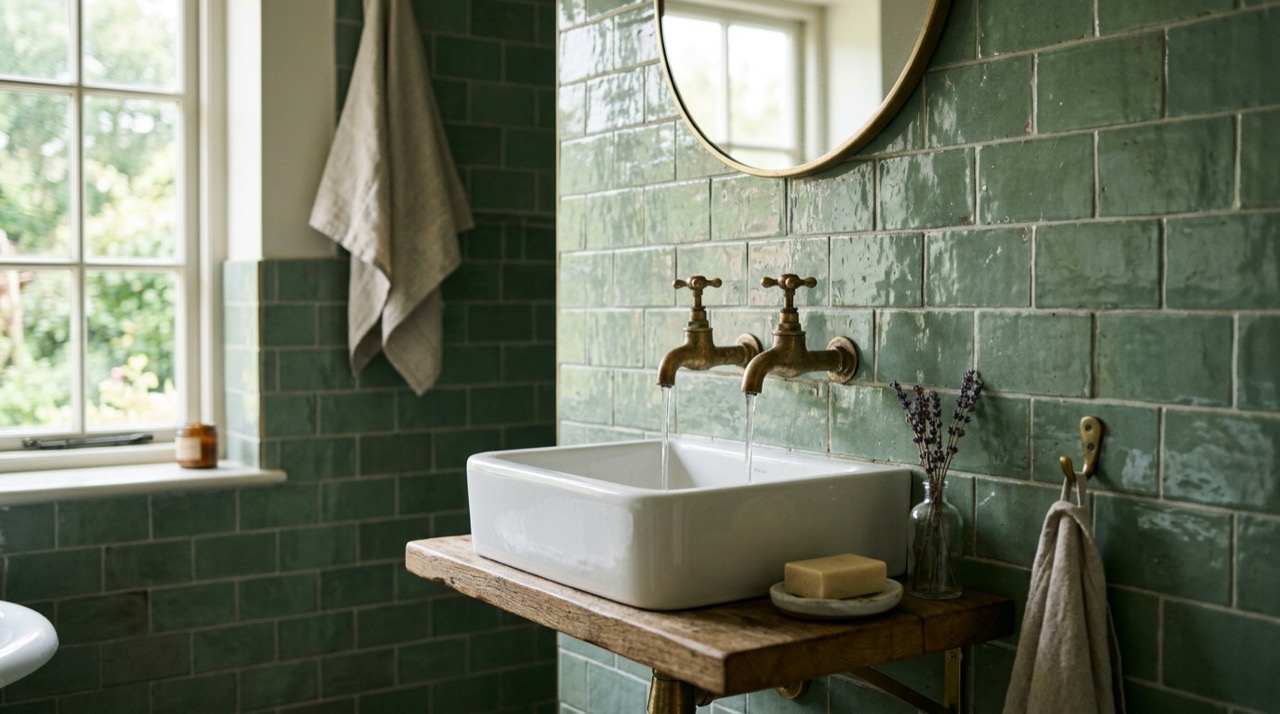
- Zone Two Vanity Splashbacks accommodate artisan glazed earthenware sealed against daily water splashes
- Wet Floor Zones require matte textured porcelain mosaics achieving pendulum test ratings above thirty six
Comparing Glazed Zellige Earthenware and Matt Porcelain
Vitrified porcelain bodies offer exceptional thermal stability and dense moisture resistance for demanding areas. These dense ceramic units handle heavy foot traffic and thermal fluctuations without cracking or losing structural integrity over decades of daily residential use.
Hand glazed crackle earthenware displays beautiful pooled colour variations across the surface. Artisans achieve these depths through specialized kiln firings requiring installers to apply penetrating sealers immediately to protect the porous clay bodies from moisture ingress. Renting tenants who cannot lay real ceramics can try stick on bathroom tiles for a quick splashback update. All wet-zone substrates and sanitary waste fittings should comply with British Standard BS 5385 and WaterSafe UK plumbing regulations.
Pairing Sage, Olive, and Emerald Tones with Unlacquered Brass

Unlacquered living brass fittings develop a warm organic patina against deep bottle green tiles. This traditional hardware choice introduces rich metallic contrast that complements earthy ceramics while aging gracefully with regular household interaction.
Quarter sawn natural oak vanities introduce organic timber grain against soft sage green glazes. The subtle wood figuring softens the overall room aesthetic while creating a grounded connection to natural materials throughout the domestic interior design scheme.
Selecting warm ivory or charcoal grout helps define geometric tile patterns precisely. Matching grout shades enhances clean sightlines while contrasting options accentuate individual tile shapes to create striking visual geometry across large wall installations.
Waterproof Tanking and Substrate Priming Before Tiling
Proper subsurface preparation prevents catastrophic moisture damage behind finished tiled walls. Following strict British installation protocols ensures your botanical ceramic tiles remain secure and watertight across decades of daily family shower use.
- Step One Mechanically fix cement backer boards to timber studs following British standard fifty three eighty five
- Step Two Embed flexible reinforcement tape into all internal wall corners and pipe collars
- Step Three Apply two liberal coats of liquid waterproof tanking membrane across the entire wet zone
- Step Four Allow the membrane to cure undisturbed for twenty four hours before spreading tile adhesive
Sealing Crackle Glazes and Choosing Epoxy vs Cement Grout
Using strictly pH neutral cleaners prevents etching delicate copper oxide green glaze pigments. Acidic commercial detergents strip protective surface layers and dull the brilliant sheen built by master ceramicists during high temperature kiln firing processes.
Gentle daily wiping using microfiber cloths removes hard water limescale without scratching fragile gloss finishes. Preventing mineral buildup avoids the need for aggressive scrubbing tools that permanently damage smooth decorative surfaces over time.
UK Cost, Brand, and Specification Breakdown
Before ordering materials, compare trade and retail pricing across established UK suppliers so you can balance upfront cost against long-term durability:
| Bathroom Material Tier | Typical UK Cost (GBP) | Stockists & Brands | Waterproofing & Slip Rating |
|---|---|---|---|
| Cosmetic Peel-and-Stick / Acrylic | GBP 22 - GBP 45 per sq.m | B&Q, Dunelm, Homebase | Splash-zone only; requires silicone perimeter seal |
| Porcelain & Glazed Ceramic | GBP 48 - GBP 85 per sq.m | Topps Tiles, Victorian Plumbing, CTD Tiles | Full wetroom compatible with BAL tanking membrane |
| Artisan Zellige, Stone & Cast Iron | GBP 110 - GBP 240+ per sq.m | Fired Earth, Mandarin Stone, Aston Matthews | Requires impregnating sealer (Lithofin Stain-Stop) |
Final Layout and Sample Testing Advice for UK Bathrooms
Balancing strict British waterproofing standards with superior glazes ensures your green bathroom tiles deliver lasting domestic value and enduring natural beauty through careful substrate preparation and expert trade installation techniques.
Frequently Asked Questions
Are ceramic green bathroom tiles suitable for shower floors?
Ceramic tiles lack the structural density required for shower floors so you must specify textured porcelain mosaics instead.
How often should artisan glazed green tiles be sealed?
Porous earthenware glazes require penetrating sealer application every twelve months to maintain total water resistance.
What adhesive works best for large format porcelain green tiles?
Polymer modified flexible cement based tile adhesive accommodates thermal movement on solid backer board substrates.
How much should I budget in the UK for professional installation versus DIY?
Hiring an accredited UK tradesperson typically adds GBP 180 to GBP 320 per day in labour, whereas tackling preparation and fitting yourself saves roughly 45% to 60% of the total project budget.
Related Architectural Guides
- Installing Stick-On Bathroom Tiles: Waterproofing and Prep Guide
- Designing a Safe Baby Bath Tub Zone: Ergonomics and Thermostatic Control
- Using Large-Format Bathroom Tiles to Expand Compact Wetrooms
- Selecting Bathroom Tiles: Porcelain Slip Ratings, Stone, and Tanking
- Specifying a Freestanding Bath Tub: Cast Iron, Stone Resin, and Floor Loads